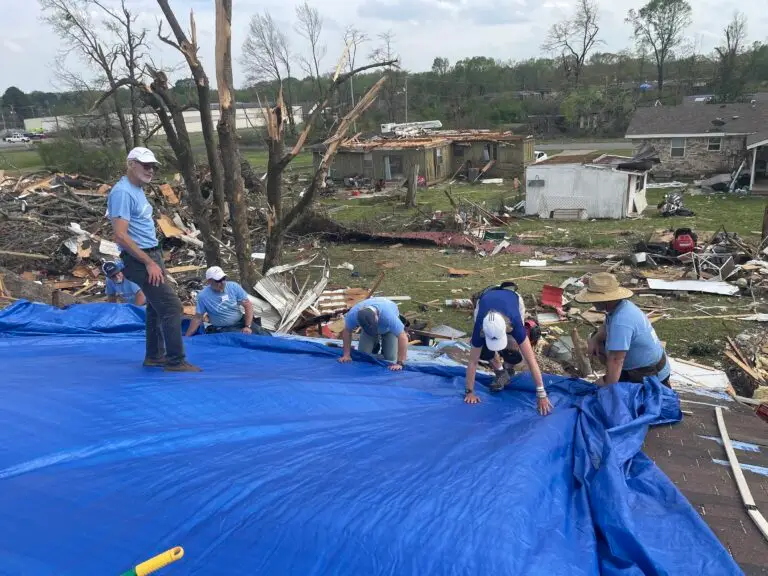
After a tornado, the most visible damage is the easiest to see. Shingles torn from roofs, trees across driveways, neighborhoods that look nothing like they did the day before. And that physical damage matters. Getting to it quickly can mean the difference between a home that’s saved and one that’s lost for good.
But there’s another layer of recovery that’s harder to see. The emotional weight a family carries after surviving a tornado — the fear, the grief, the strange mix of gratitude and loss — is just as real as the damage to their roof.
That’s why providing meaningful emotional and spiritual support for tornado survivors is just as important as the physical response.
This is a story from a tornado response in Arkansas, one that our team still talks about, because it captures exactly why this work matters.
A Storm They’ll Never Forget
Several years ago, a series of tornadoes swept through parts of Arkansas, leaving whole communities trying to find their footing in the aftermath. Hope Force Reservists deployed quickly, moving through neighborhoods where roofs were damaged, trees were down, and families were still in shock.
One of those families was an elderly couple. They told our team how they’d watched the tornado coming through the field behind their house, and they rushed to their safe room as it came straight for their street.
What happened next was something they’ll never quite be able to explain. As the tornado passed directly over their home, they felt themselves lift slightly off the ground, right there in their safe room, and then gently settle back down. When they stepped outside, their house was still standing. Aside from shingles stripped from the roof, it was structurally sound.
It felt like a miracle. And in many ways, it was. But just a few houses away, a close friend had lost their life in the same storm.
More Than A Tarp Job
When our team arrived, the immediate need was clear: the roof had to be tarped before the next round of weather came through. That’s one of the most important things we can do for a family right after a tornado, protecting their home from further damage while they’re still in survival mode.
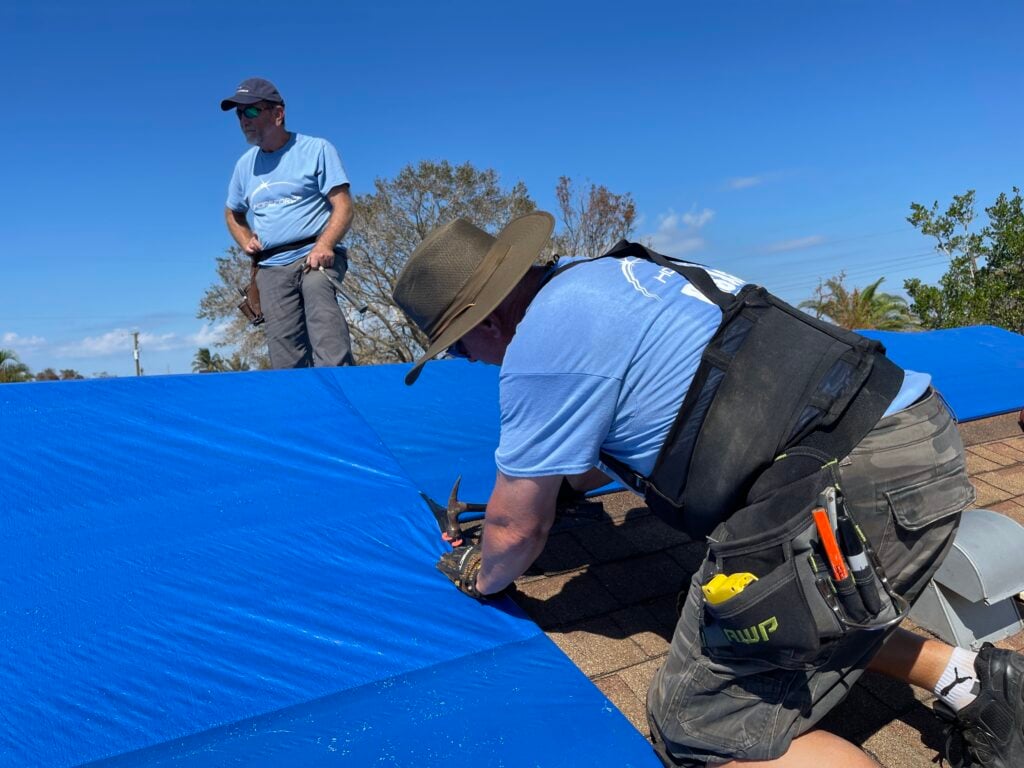
But as our Reservists worked and spent time with this couple, it became clear that the tarping was only part of what they needed.
The husband needed to tell his story. He told it again and again, repeating details, circling back, walking through the moments of the storm like he was trying to put together a puzzle. Our team didn’t rush him. They listened each time.
His wife was different. She was quiet, still, and visibly carrying the weight of everything. The fear of the storm, the grief of losing someone she loved, the strange mix of gratitude and sorrow that disaster survivors often feel when they make it out, and others don’t.
The Power of Presence in Tornado Recovery Support
This is where Hope Force chaplains stepped in —not to fix anything or to offer the right words, but to simply be present with her.
They sat with her, listening and acknowledging the weight of what she was carrying, and reminding her, gently, that she wasn’t carrying it alone.
That kind of presence doesn’t make the news. It doesn’t show up in before-and-after photos. But for this woman, in that moment, it mattered just as much as the tarp going on her roof.
Research on the psychological effects of tornadoes shows that emotional trauma can linger long after the physical damage is repaired, sometimes for months or years. Having someone trained in Emotional and Spiritual Care present (like a Hope Force Reservist) in those early hours can make a meaningful difference in a survivor’s recovery as they process their trauma.
Learn more about the psychological and emotional effects of tornadoes, how to cope, and support survivors here.
What Hope Force Believes About Disaster Recovery
At Hope Force, we show up after tornadoes because homes matter, but people matter even more.
Real recovery happens on two levels at once: the visible and the invisible. Getting a roof secured is urgent and practical and important. But so is sitting with someone who just watched their world get rearranged, and making sure they feel seen.
That’s what we mean when we talk about Emotional and Spiritual Care. It’s not a program or an add-on to our disaster relief work. It’s built into how our Reservists are trained to show up to every deployment, with their hands ready to work and their hearts ready to listen.
How to Support Disaster Survivors: Practical Ways to Help
Whether you’re looking to volunteer, give, or simply be better prepared, here are the ways you can help tornado survivors:
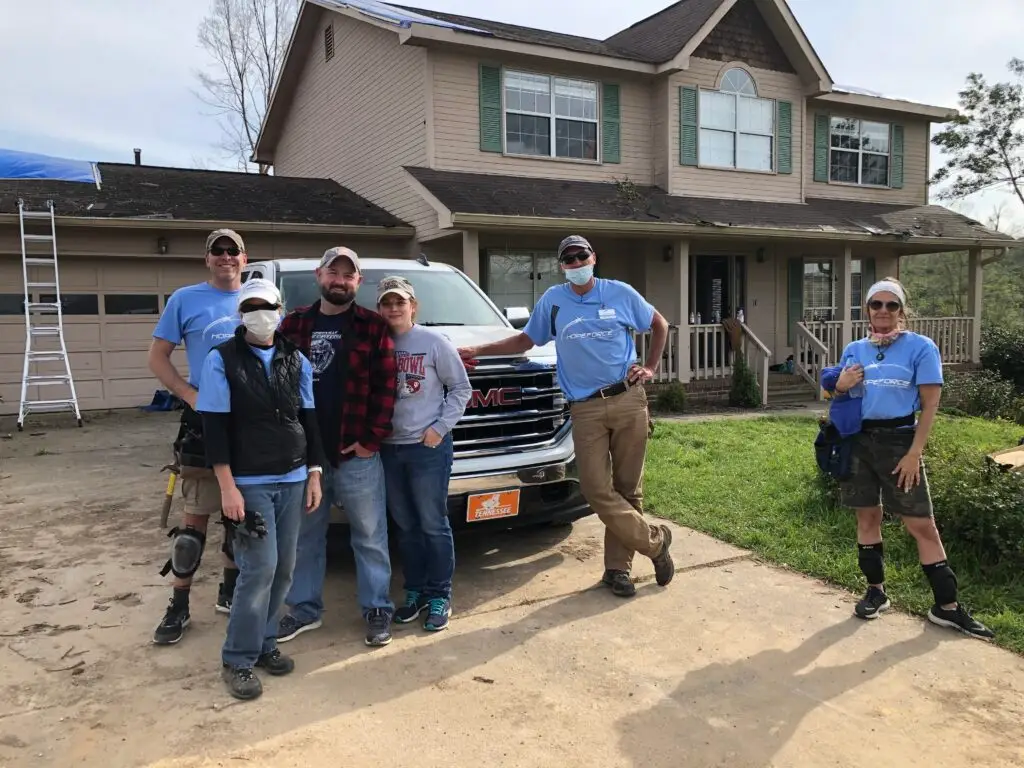
- Help protect homes after a disaster. Tarping roofs and making quick repairs in the hours after a tornado can prevent a damaged home from becoming a destroyed one. This is one of the most tangible ways to make a difference and is a large part of what Hope Force offers tornado survivors. If you want to roll up your sleeves and serve with us, learn more on our Get Trained page.
- Show up with a compassionate presence, not just a work plan. Sometimes the most important thing you can offer isn’t a practical skill, but your full attention. Listening to survivors without rushing or trying to fix gives them space to process what they’ve been through.
- Understand what families face before and after a storm. The more informed and prepared you are going into a tornado-stricken area, the more useful you’ll be when it counts.
- Help families prepare for the next one. A safe room and an emergency plan can save a life. Knowing where to go and what to do before disaster strikes makes all the difference.
- Partner with people doing this work well. Volunteering or giving to an experienced disaster response team ensures your help actually reaches the people who need it.
Helpful tornado resources:
- Best Emergency Alert Apps for Tornado Warnings
- The Ultimate Guide to Tornado Preparedness
- How to Build or Retrofit a Tornado Safe Room
You Can Be Part of Someone’s Recovery
Every time a tornado touches down somewhere in this country, there are survivors like this couple who need someone to show up with a tarp, and even more, a willingness to listen. They need someone who will reassure them that, in one of the hardest moments of their lives, they are not alone.
Providing real emotional support for tornado survivors isn’t reserved for therapists or chaplains. It starts with trained, compassionate people who are willing to show up. Hope Force exists to equip everyday people like you, not just specialists, to respond well when disaster strikes.
Are you ready to join us in bringing hope after disaster? Get started on your disaster relief training today. ⬇️